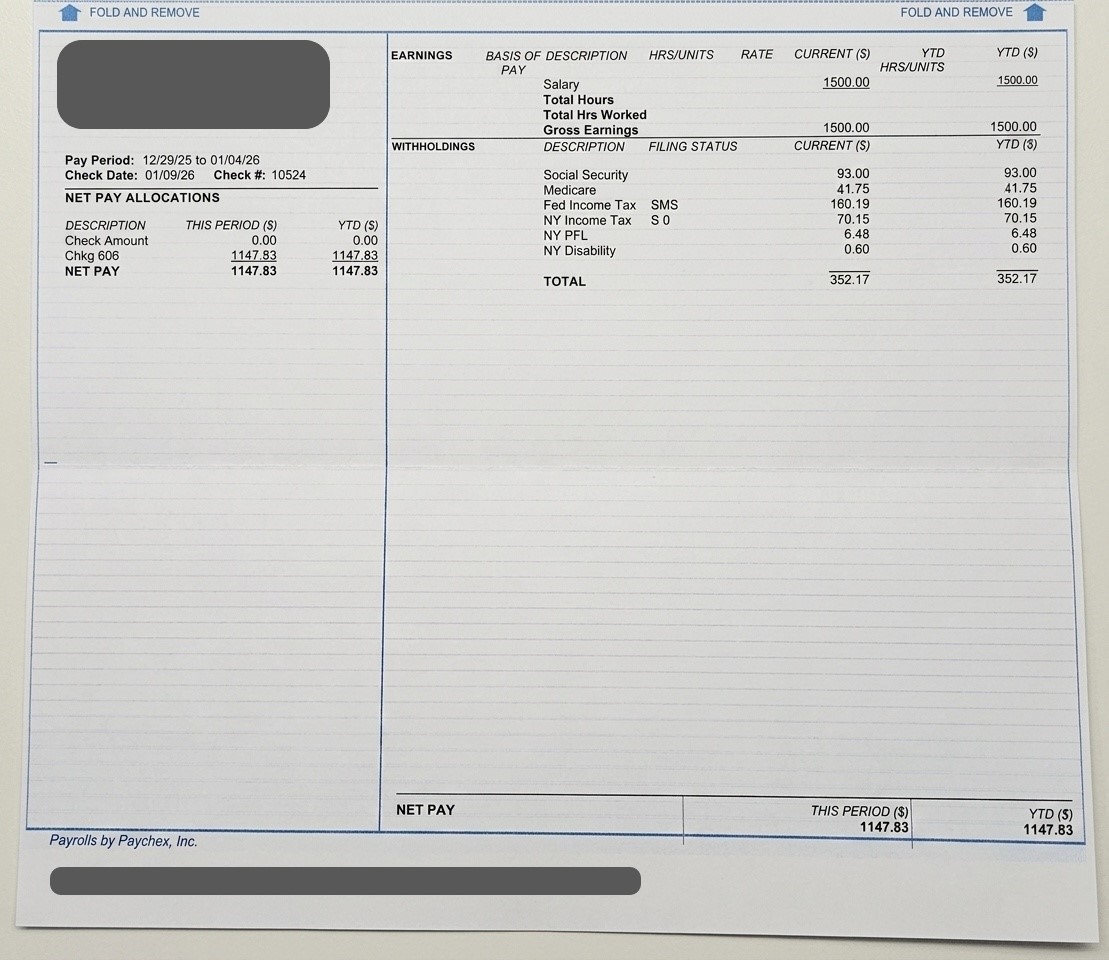
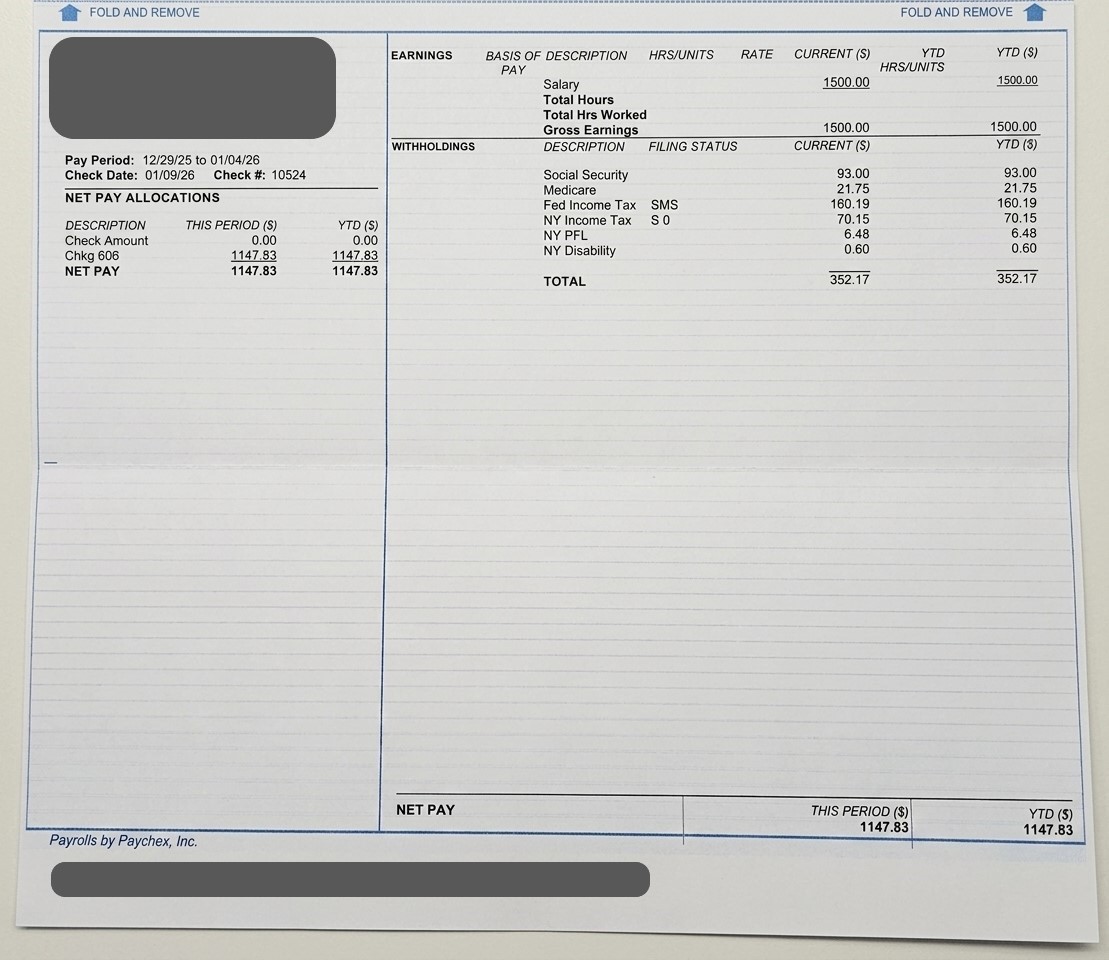
Drag the handle to compare the two stubs.
Same person. Same job. Same rental application attached to both. Take your time.
Ready? Scroll down to see what the scanner found.
Two pay stubs from the same applicant. Same employer, same name, same rental application. One number was changed. Take a look and see if you can find it.
These are test documents we built. The scan output below is what RentalGuards actually returned.
Document A is a real pay stub with identifying information removed. Document B is the same stub with one number deliberately changed for this demonstration.
Same person. Same job. Same rental application attached to both. Take your time.
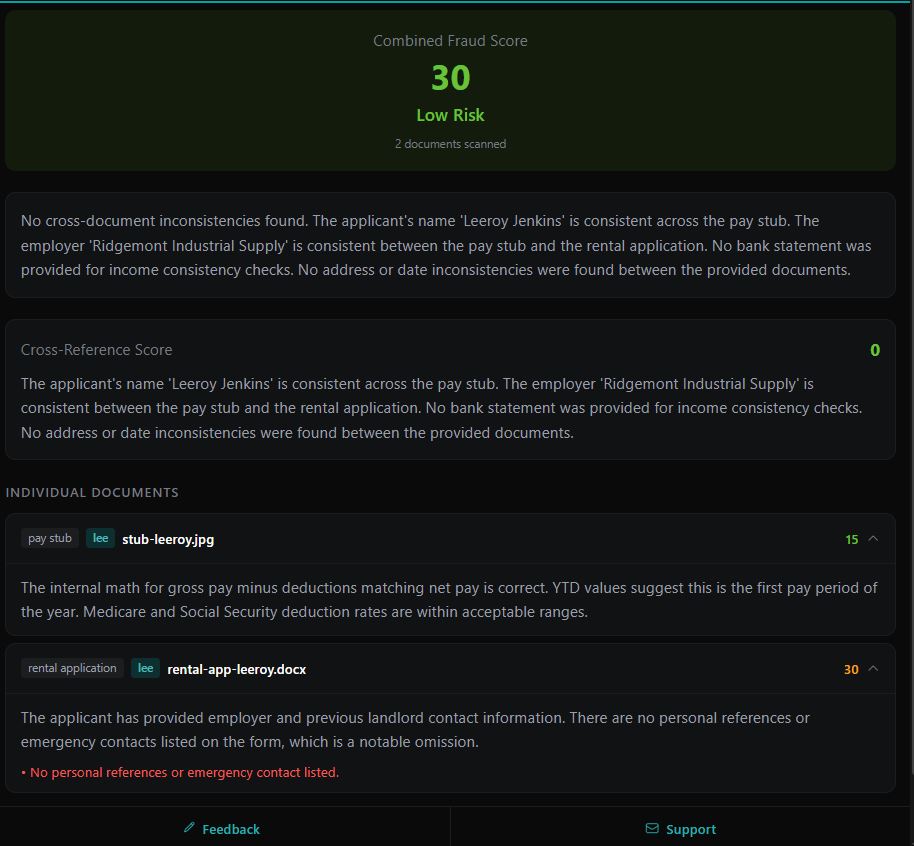
stub-leeroy.jpgThe internal math checks out. Gross pay minus deductions matches net pay. Medicare and Social Security deduction rates are within expected ranges. YTD values suggest this is the first pay period of the year — consistent with what's on the document.
Name and employer match the pay stub consistently. One flag: no personal references or emergency contacts listed on the application. Notable omission — worth asking about, but not a fraud signal on its own.
Name, employer, and address are consistent across both documents. No cross-document inconsistencies found.
stub-leeroy-setA.jpgAll other math passed. The document looks clean. One number is wrong.Medicare stated as $41.75. Computed expectation based on gross pay: $21.75. That's a 92% deviation — almost exactly double what it should be.
Same rental application, same flag: no personal references or emergency contacts listed.
Name, employer, and address are consistent across both documents. No cross-document inconsistencies found.
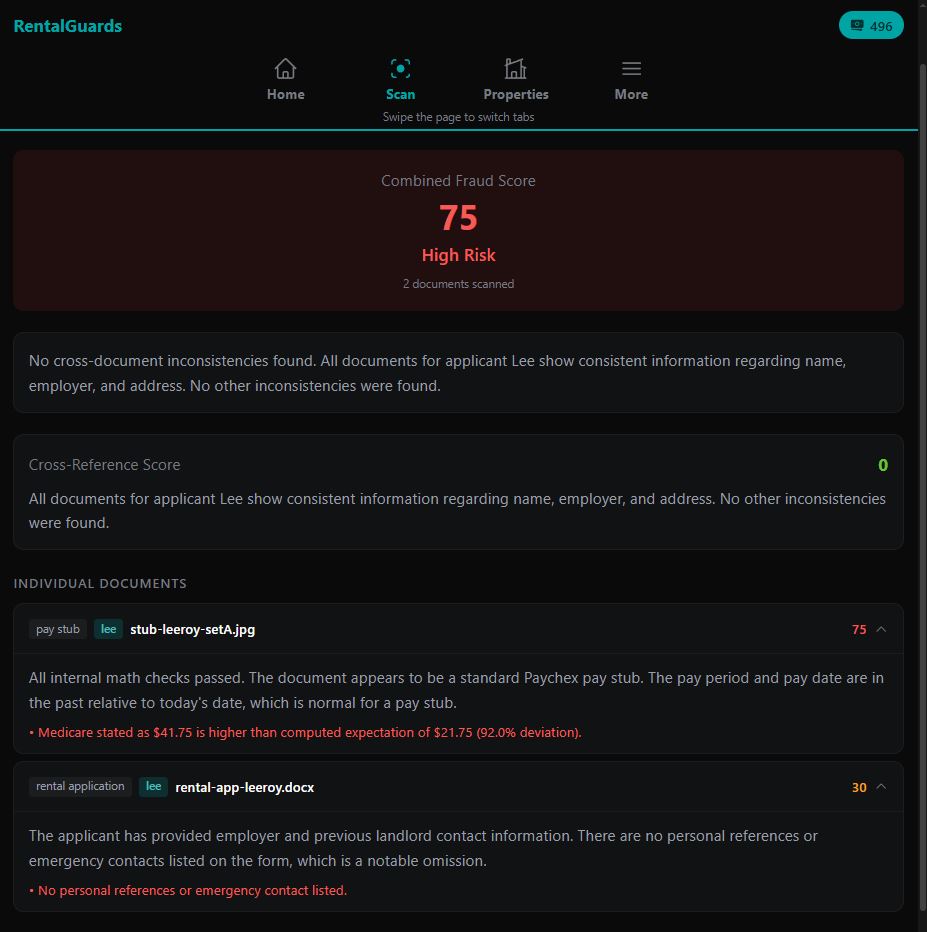
Both documents show the same name, the same employer, the same address. Cross-referenced against each other, they're consistent — that's why the cross-reference score is 0 on both.
What caught the fake was arithmetic. Medicare withholding has to follow a formula based on gross pay. On Document B it doesn't. Not by a small rounding difference — by 92%. One number, changed once, flagged on the first check.
The person who edited this stub probably didn't know how Medicare withholding works. Most people don't. That's the point.
Every number on every document gets verified against the math it's supposed to follow — gross pay, tax rates, withholdings, net pay. If the arithmetic doesn't add up, it's flagged. No matter how clean the rest of the document looks.
Name, employer, income, dates, addresses — all compared across every document in the packet. Catches the relational fraud that clean math alone won't find.
You get both layers on every Cross-Check scan.